

While the sky over Ukraine is closed, Ukrainians are actively using airports in Poland, Romania, Hungary, and Slovakia. So, the question of comfort in the sky remains relevant for us. However, air travel always involves a lack of communication, airplane mode, and being offline for several hours, which currently causes more anxiety than relaxation from forced "digital detox." Yet, the aviation space right now, in 2026, is experiencing a true technological revolution. Leading airlines are actively signing contracts with SpaceX to provide passengers with high-speed internet at an altitude of 10,000 meters.
For example, recently, the Hungarian low-cost airline Wizz Air officially announced a strategic partnership with Starlink Aviation. This indicates that high-speed internet is gradually becoming a new standard for comfort in flight.
Which airlines popular among Ukrainians are already implementing Starlink?
Ukrainians most often choose flights from the nearest European airports, focusing on affordable prices and convenient connections. And until recently, high-speed internet on board an airplane was associated with luxury, as it was predominantly available on premium-class airlines. However, the situation is now changing: carriers are striving to make their customers' flights more comfortable, or perhaps intense competition for passengers has simply begun in the market.
Wizz Air
The Hungarian airline became the first low-cost carrier in Europe to equip its aircraft with Starlink terminals. The official announcement of the agreement took place on June 8, 2026, and it sparked significant discussion amid Starlink's competition with Amazon Leo. But we'll talk about that later.
Equipment installation will begin in the near future, and the full launch of the service for passengers is planned for 2027. According to the plans, Starlink will be available on all company aircraft, including those based in airports closest to Ukraine in Poland, Hungary, and Romania.
 Photo: Wizz Air
airBaltic
This airline was the first on the continent to begin large-scale installation of Starlink on its Airbus A220-300 aircraft. According to the carrier, more than half of its fleet is now equipped with Starlink, and passengers have access to the proprietary Skynet onboard portal during the flight. Internet on board airBaltic is completely free and requires no registration, password entry, or account creation.
 Photo: airBaltic
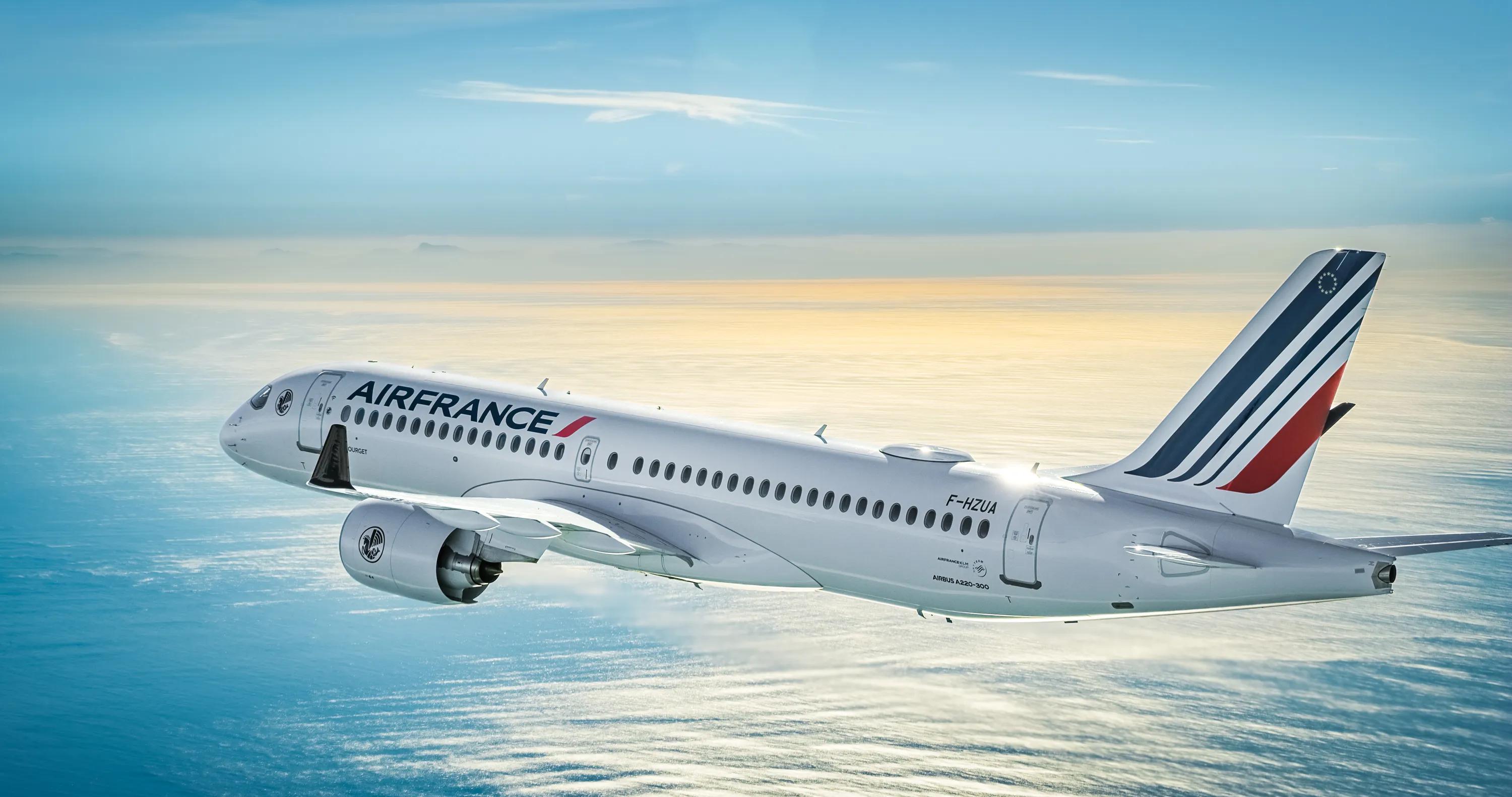
Air France
The French airline Air France is one of the largest European carriers that has started cooperation with SpaceX. The company signed its partnership agreement for the implementation of the Starlink system in autumn 2024, and the installation of terminals on aircraft began in 2025. The modernization covers both long-haul liners and regional aircraft of the company, with a plan to fully complete the equipping of the entire fleet by the end of 2026. Access to the high-speed network is free for passengers of all classes, but a mandatory condition for connection is authorization through a profile in the Flying Blue loyalty program (it can be created for free directly during the flight).
SAS
The Scandinavian airline SAS began transitioning to SpaceX technologies at the end of last year, and in the spring of 2026, it launched its first regular flights with free Starlink internet. They plan to complete this process in 2027.
The main advantage for passengers is continuous gate-to-gate connectivity. The network becomes available from the moment of boarding the aircraft and operates until disembarking at the arrival airport. The service is completely free and unlimited for EuroBonus loyalty program members, and the equipment's capacity is sufficient for over 300 people on board to simultaneously use high-quality internet.
 Photo: Infinite Flight Community
Who else is equipping aircraft with Starlink terminals or has already signed an agreement?
If you are planning complex routes, transatlantic flights, or flights with other European airlines, here is a list of companies that have also signed an agreement with SpaceX and are at various stages of system implementation:
Europe:
-
British Airways (UK)
-
Iberia (Spain)
-
Aer Lingus (Ireland)
-
ITA Airways (Italy)
-
Vueling (Spain)
-
Virgin Atlantic (UK)
-
Eurowings (Germany)
-
Air Dolomiti (Italy)
-
Discover Airlines (Germany)
-
Edelweiss Air (Switzerland)
North and South America:
-
United Airlines (USA)
-
American Airlines (USA)
-
Southwest Airlines (USA)
-
Alaska Airlines (USA)
-
Hawaiian Airlines (USA)
-
WestJet (Canada)
-
Copa Airlines (Panama)
-
JSX (USA)
Middle East:
-
Qatar Airways (Qatar)
-
Emirates (UAE)
-
FlyDubai (UAE)
-
Gulf Air (Bahrain)
Asia and Oceania:
-
Korean Air (South Korea)
-
Asiana Airlines (South Korea)
-
Air Busan (South Korea)
-
Air Seoul (South Korea)
-
Jin Air (South Korea)
-
ZIPAIR Tokyo (Japan)
-
Air New Zealand (New Zealand)
Why aren't all airlines ready to integrate satellite internet from SpaceX?
In 2026, SpaceX has contracts with airlines to equip over 7,000 aircraft worldwide with Starlink terminals. But even here, there is already competition. More precisely, we are talking about the Amazon Leo project, which will officially launch this summer but is already actively signing collaborations with airlines. This includes American airlines Delta Air Lines and JetBlue, which rejected Starlink. The main reason for their choice was the terms of integrating the satellite system with their internal corporate services.
At the same time, some airlines refuse to install satellite systems on board. This position is held by the European low-cost airline Ryanair (incidentally, Wizz Air's main competitor, which we mentioned above). The company's management rejected SpaceX's proposal for economic reasons. As Ryanair CEO Michael O'Leary noted, installing an external antenna on the fuselage leads to a 2% fuel loss due to its weight and drag. Moreover, on short European flights, which usually last about an hour, there is no urgent need for stable communication. Due to significant additional costs, the company would have to raise ticket prices, and low-cost carriers believe that their customers primarily fly for low fares, and being online is not a priority for them.


